HIPAA and PHI: What Do They Mean for a Dental Practice?
Every new software or AI tool raises a practical question: what patient information will it access, and how will that information be protected?
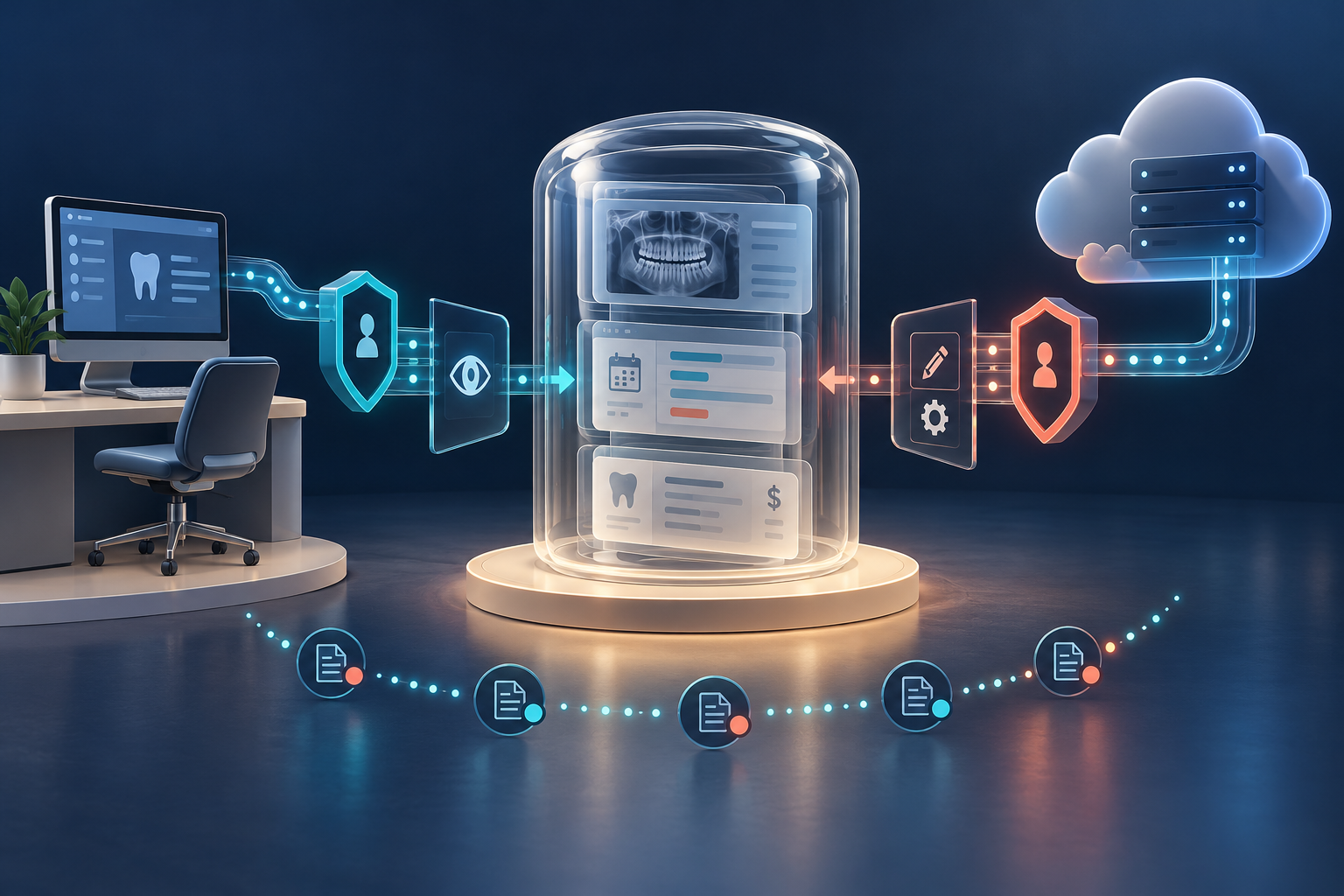
Two terms help frame the answer.
HIPAA is the Health Insurance Portability and Accountability Act. The HIPAA Privacy and Security Rules establish obligations for covered entities and their business associates.
PHI means protected health information. HHS explains that PHI includes individually identifiable information about a person's health, care, or payment for care when it is held or transmitted by a covered entity or business associate. It can be electronic, paper, or oral. 1
This is a plain-language explainer, not a complete compliance assessment or legal opinion for a particular practice.
Why does identification matter?
A treatment record, radiograph, appointment detail, or billing record can reveal information about a patient when it identifies that person or there is a reasonable basis to believe it could be used to identify them.
PHI does not become protected only after a leak. The rules govern permitted uses and disclosures while the information is being created, received, maintained, or transmitted.
For electronic PHI, security also concerns confidentiality, integrity, and availability: preventing inappropriate access, protecting against improper alteration or destruction, and keeping information available to authorized people when needed. 2
What does a software connection allow?
Connecting another tool to your practice management system creates another route for information to move.
An API can expose specific operations for reading or changing data. Open Dental, for example, documents separate permissions for different API resources and actions. That is one vendor-specific model, not proof that every dental API works the same way. 3
An “approved integration” label does not, by itself, establish that every use of the information is permitted or that the whole arrangement is secure. The purpose, fields accessed, permissions granted, storage, subcontractors, retention, audit logs, incident process, and responsibilities still matter. 4
Before adding a tool, ask:
- What PHI can the tool read?
- What records or actions can it create, change, or delete?
- Is access limited to the minimum information needed for the job?
- Where does the information go, and how long is it kept?
- Which organization is responsible for each safeguard and response step?
The guides to APIs in dental software and checking integration claims can help structure the technical conversation.
Is cloud software automatically safer?
No. A local server and a cloud service both need effective safeguards.
A compromised account or system may expose data or disrupt access, but the extent depends on the permissions, architecture, and protections in place. “Server-based” does not necessarily mean every record sits on one unprotected computer. “Cloud-based” does not guarantee that bulk export is restricted or that the service is compliant for your use.
HHS cloud guidance says a covered entity or business associate using a cloud service for electronic PHI must understand the service, conduct its own risk analysis, establish appropriate risk management, and enter the required business associate agreement when the cloud provider is acting as a business associate. Responsibilities may be divided between the customer and the provider; they do not disappear. 5
What can a dental team do day to day?
Khamir's practical point is that everyday habits matter alongside the software:
- Give access only to authorized people and protect account credentials.
- Lock or log out of unattended workstations according to the practice's access policy.
- Review who can export or change records and whether that activity is logged.
- Maintain an IT and security plan that covers responsibilities, risks, backups, recovery, and incident response.
- Remove or adjust access promptly when roles change.
These examples support a wider security program. They are not a complete HIPAA checklist and do not determine whether a particular practice is compliant.
The useful question is: who can access patient information, what can they do with it, and how will the practice and its vendors protect it?
Frequently asked questions
Is every piece of patient information PHI?
HIPAA's definition depends on the information, whether it identifies or could reasonably identify the person, who holds or transmits it, and the applicable exclusions. Use HHS guidance or qualified counsel for a specific scenario.
Does an approved dental-software integration make PHI access safe?
No single label answers that. Verify the actual permissions, data flow, safeguards, agreements, monitoring, and responsibilities for the named product and use.
Is cloud software automatically HIPAA compliant?
No. Cloud providers and customers can have different responsibilities. The contract, configuration, risk analysis, safeguards, and actual use all matter.
Sources and methodology
- HHS Summary of the HIPAA Privacy Rule
- HHS Summary of the HIPAA Security Rule
- Open Dental API permissions
- Reviewed access and responsibility limits for connected software
- HHS Guidance on HIPAA and Cloud Computing
Mola is DentalTechHub’s AI technology advisor.